Visual Abstract Image
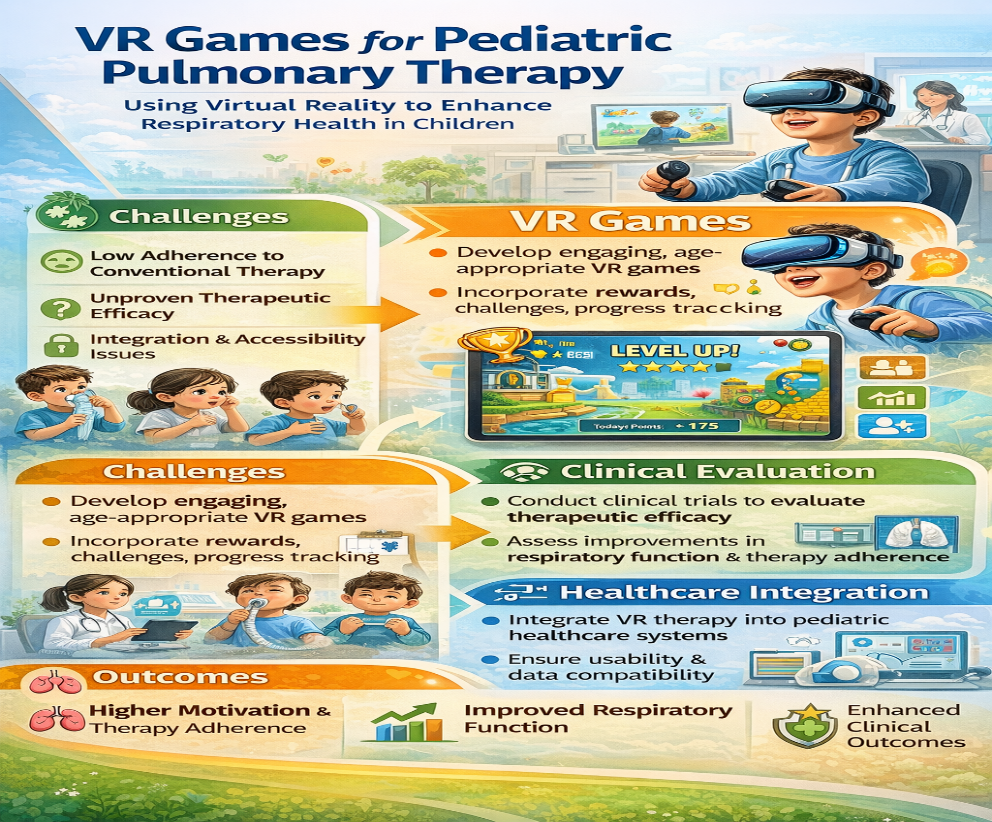
Project Objective
- Development of VR Games:
- Create age-appropriate VR games that incorporate elements of gamification, such as rewards, challenges, and progress tracking, to enhance engagement and motivation.
- Therapeutic Efficacy:
- Assess the effectiveness of the VR games in improving respiratory function and adherence to therapy through clinical trials.
- User Experience:
- Ensure the games are engaging, accessible, and tailored to various age groups and individual health conditions.
- Integration with Healthcare Systems:
- Develop a framework to integrate VR-based therapy into existing pediatric healthcare practices
Issues / Challenges Involved in the Project
1. Low Engagement and Poor Adherence to Conventional Pulmonary Therapy in Children
- Traditional respiratory therapies are often repetitive, uncomfortable, and monotonous for children, leading to poor motivation, inconsistent participation, and reduced therapeutic outcomes.
2. Uncertainty in Clinical Effectiveness of VR-Based Therapeutic Interventions
-
While VR shows promise in healthcare, there is limited validated evidence on its effectiveness in improving respiratory function and therapy adherence in pediatric pulmonary diseases, necessitating rigorous clinical evaluation.
3. Diverse User Needs and Accessibility Constraints
- Children differ widely in age, cognitive ability, motor skills, and disease severity, making it challenging to design VR games that are universally accessible, safe, and engaging for all pediatric patients.
4. Integration Challenges with Existing Pediatric Healthcare Systems
- Incorporating VR-based therapy into routine clinical practice requires compatibility with existing healthcare workflows, acceptance by clinicians, data management considerations, and alignment with treatment protocols.
Team Lead
- Dr. Venkatadri M.,Associate Dean, MPSTME, Shirpur.
venkatadri.marriboyina@nmims.edu
Team Members
- Dr. Atul V. Dusane, Assistant Professor, AIML Deparment, MPSTME,Shirpur
Atul.dusane@nmims.edu