Acronyms of Topic Name: DTP-SC-TUP
Visual Abstract Image
Objectives
- Model dynamic smart city workloads based on traffic density and usage patterns
- Design a demand-aware task placement mechanism for fog–cloud environments
- Adapt task offloading decisions in response to real-time demand variations
- Minimize latency, energy consumption, SLA violations and improve resource utilization for delay-sensitive smart city applications
- Compare dynamic scheduling with static task placement approaches
- Evaluate performance using simulation-based smart city scenarios
- Demonstrate scalability and applicability to real-world smart city deployments
Issues Involved
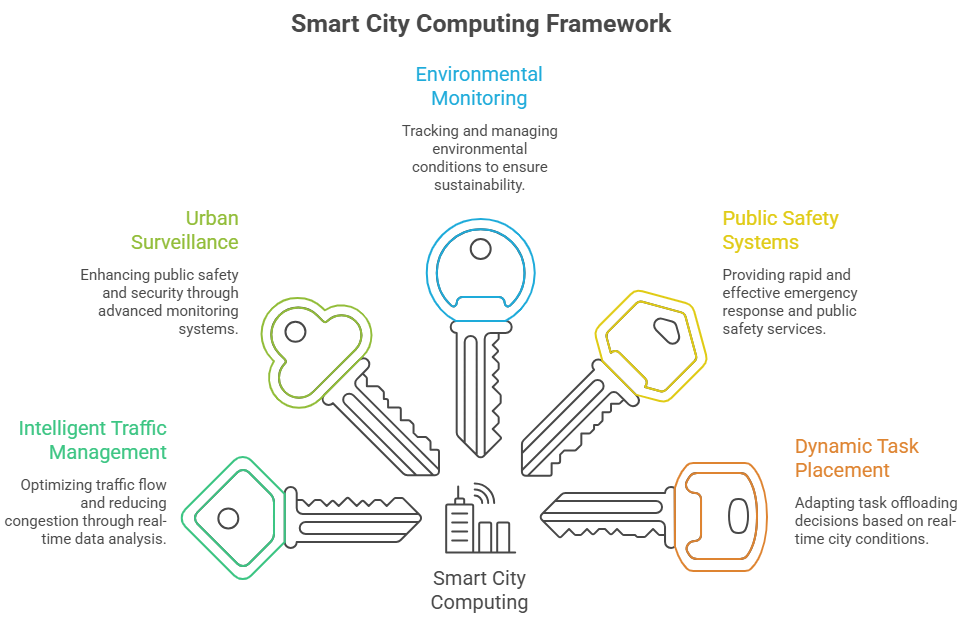
Smart city applications such as intelligent traffic management, urban surveillance, environmental monitoring, and public safety systems generate highly dynamic and location-dependent workloads that impose stringent latency and reliability requirements. Conventional cloud-centric processing models are often unable to meet these demands due to increased communication delays and fluctuating network congestion during peak urban activity.
Team Lead
Prof. Variza Negi
Variza.Negi@nmims.edu